Where to Build Next: Five Markets Outside Miami
The Real Estate Supply Problem in Florida
South Florida has a housing problem that is equal parts demand surge and supply failure. The region absorbed an estimated 700,000 net new residents between 2020 and 2025 — one of the largest population displacements in modern American urban history. The infrastructure, land, and political will to accommodate that growth within Miami-Dade's established urban fabric simply does not exist at the scale required. The result is a structural housing deficit that is pushing buyers, renters, and developers outward along every major highway corridor in the tri-county area and beyond.
For residential developers, this is not a secondary market story. It is a primary market opportunity that happens to require a different set of site selection criteria, a different regulatory environment, and a different civil engineering discipline than infill urban development. The communities described below are not overflow markets — they are genuine growth frontiers with their own demand drivers, and each one rewards developers who understand the land, the infrastructure, and the local approvals process from the outset.
Homestead & Florida City
Homestead is the most significant land bank remaining within Miami-Dade County, and it is actively transitioning from agricultural and military-adjacent uses to large-scale residential subdivision development. The Florida Turnpike extension and US-1 corridor provide adequate connectivity to the employment base in Kendall and Doral, and the presence of Homestead Air Reserve Base creates a permanent, stable workforce demand segment that is underserved by current housing inventory.
The civil engineering context here is unique and requires respect. Much of the developable land sits at low finished elevations within or adjacent to the Everglades buffer zone, meaning stormwater management is not a code checkbox — it is the defining design challenge of every project. South Florida Water Management District permitting governs most sites, and the design of retention systems, control structures, and finished floor elevations must be coordinated against both regulatory requirements and the practical reality of king tide flooding events that are intensifying in frequency. Developers who treat this as standard suburban engineering do so at significant schedule and cost risk.
The Opportunity: Attainable single-family and townhome product at price points the rest of Miami-Dade can no longer deliver. First-time buyers and workforce households are the primary demand segment — and there are a lot of them.
Pembroke Pines & West Miramar
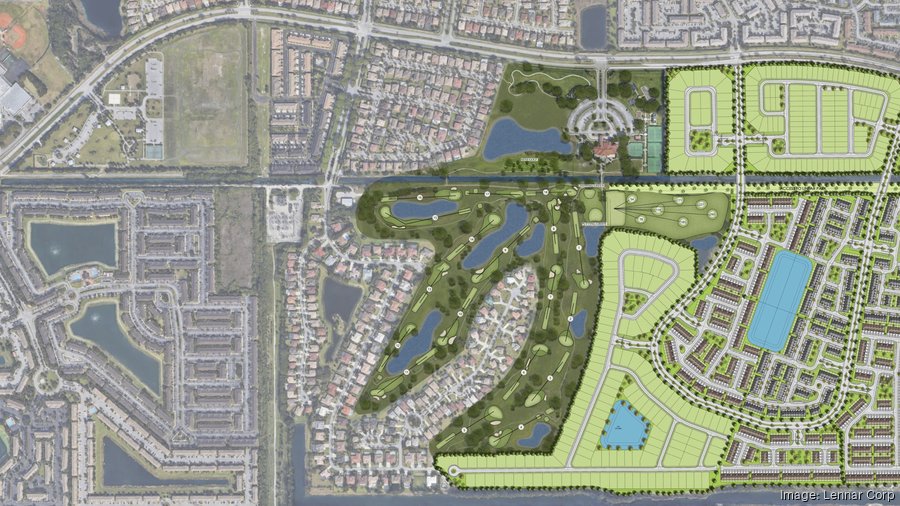
Pembroke Pines has been one of Broward County's most reliable residential growth engines for three decades, and its western expansion corridor — particularly the land west of Interstate 75 — continues to absorb demand from Miami-Dade buyers priced out of their home county while remaining within practical commuting distance of both Miami and Fort Lauderdale employment centers. The school district quality in this corridor is a genuine and measurable demand driver, particularly for the Latin American family buyer who is price-sensitive but will not compromise on public education quality.
The infrastructure story in West Pembroke Pines is more mature than in frontier markets further south or west — utility extensions are more predictable, road network capacity exists, and the Broward County permitting environment, while rigorous, is well-understood by experienced local engineering teams. The remaining large-parcel land west of Flamingo Road represents some of the most actionable subdivision opportunity in South Florida today, and it is moving.
The opportunity: Move-up and family-format product at $450K–$650K. The buyer pool here is deep, diverse, and employment-stable. Demand consistently outpaces delivery.
Westlake & Western Palm Beach County
Westlake — the master-planned city incorporated in 2016 on land west of Royal Palm Beach — is one of the most closely watched residential development experiments in Florida. Built on former J.W. Corbett Wildlife Management land with a fully planned civic infrastructure, it represents the modern expression of the master-planned community model, and its absorption rates have validated the thesis that buyers will follow quality product and school quality even into previously undeveloped land if the price point is right.
The broader western Palm Beach County corridor — spanning from Loxahatchee through Acreage and southward toward Wellington — offers large-tract development parcels that are increasingly attractive to national homebuilders seeking scale. The civil engineering complexity of this corridor centers on wetland delineation, where the interface between developable upland and jurisdictional wetlands requires precise survey and mitigation planning before any meaningful site design can begin. Getting the land assessment right at the front end of the process is the difference between a viable subdivision and a project that loses a third of its net developable area in the regulatory process.
The opportunity: Larger-format, higher-price-point product for the remote-worker and retiree demographic. Palm Beach County's population growth is accelerating, and land west of the urban core is the only place to build at scale.
Port St. Lucie & the Treasure Coast
Port St. Lucie has been the fastest-growing city in Florida by percentage for multiple consecutive years — a statistic that reflects genuine, employment-anchored demand rather than speculation. The Tradition corridor, anchored by Cleveland Clinic's regional medical campus and a growing life sciences and healthcare employment cluster, has created a workforce buyer pool with stable incomes and genuine housing need. Treasure Coast International Airport's ongoing expansion adds an additional economic development catalyst with long-term implications for industrial and professional employment growth in the region.
The distance from Miami — roughly 110 miles — means this market operates largely independently of the Miami demand cycle, which is actually a feature for developers seeking to diversify geographic exposure. Land prices remain meaningfully lower than Broward and Palm Beach, and the St. Lucie County development review process, while thorough, is less congested than the tri-county urban core. The civil challenge unique to this corridor is the St. Lucie River watershed and the South Florida Water Management District's strict nutrient loading requirements for stormwater discharges — a regulatory condition that requires specialized stormwater design from the earliest stages of site planning.
The opportunity: The best land-cost-to-demand ratio in coastal South Florida. Attainable product sells immediately. Premium product in Tradition is absorbing at pace. The window before land prices fully reflect this story is closing.
Ave Maria & Eastern Collier County
Ave Maria is a rare thing in American real estate: a genuinely new town built from scratch on a long-term vision that is actually delivering. Located approximately 30 miles east of Naples on Immokalee Road, Ave Maria was conceived as a complete community — university, civic infrastructure, retail, and residential — and its absorption over the past decade has validated a demand segment that broader market analyses consistently miss: the buyer seeking affordable land, low density, and a high-quality community environment who does not need daily access to an urban employment core.
The surrounding eastern Collier County corridor is now seeing secondary development pressure as Ave Maria's success demonstrates the market's validity. Collier County's land development regulations are detailed and the environmental review process for projects in proximity to Big Cypress and Everglades systems requires sophisticated ecological assessment and mitigation planning. But for developers willing to invest in the front-end land planning process, the price per acre and the quality of the demand profile make this one of the most attractive large-tract residential markets in South Florida.
The opportunity: Estate-lot and premium single-family product for the retiree and second-home buyer. Naples-adjacent demographics mean above-average median income and genuine purchasing power. Low competition from other developers due to the regulatory complexity barrier.
ASOM's Advantage
Your End-to-End Development Partner from Raw Land to Recorded Plat
Every market described above rewards developers who invest in the right civil and engineering partnership at the earliest stage of the process — not after the land is under contract. The regulatory complexity, the environmental constraints, and the infrastructure coordination requirements of South Florida's growth corridors are not obstacles to be managed reactively. They are knowable conditions that, when understood early, become competitive advantages.
American Services of Miami is a full-service development engineering partner for residential subdivision projects across South Florida. We begin with boundary and topographic survey to establish the precise parameters of what you own and what you can build. We move into site planning and land use entitlement support, working alongside your planning counsel to maximize net developable area. Our civil engineering team delivers infrastructure design across grading, drainage, water, sewer, and roadway. We manage the full permitting cycle — SFWMD, FDOT, county and municipal — and provide construction administration through to final plat recording.
We are not a firm that hands off between phases. The same team that does the survey knows the site plan, and the same team that designs the stormwater system manages the SFWMD permit. That continuity is not a workflow preference — it is a schedule protection and a cost control mechanism that compound over the life of your project.