Exploring Charter Development for Miami's School Shortage Problem
A Population Surge Inevitably Leads to Crowded Classrooms
In September 2025, Success Academy — the highest-performing charter network in New York City, with nearly 60 schools and a 100% college acceptance rate — announced its expansion into Miami with Governor DeSantis, backed by a $50 million gift from Citadel CEO Ken Griffin. The target: three to five schools by the 2027–28 school year, serving up to 10,000 Miami-Dade students within five years. That announcement was a signal, not an anomaly. Miami has become the most attractive expansion market for nationally recognized charter operators, and the pipeline of new school projects is accelerating faster than the development infrastructure to support it.
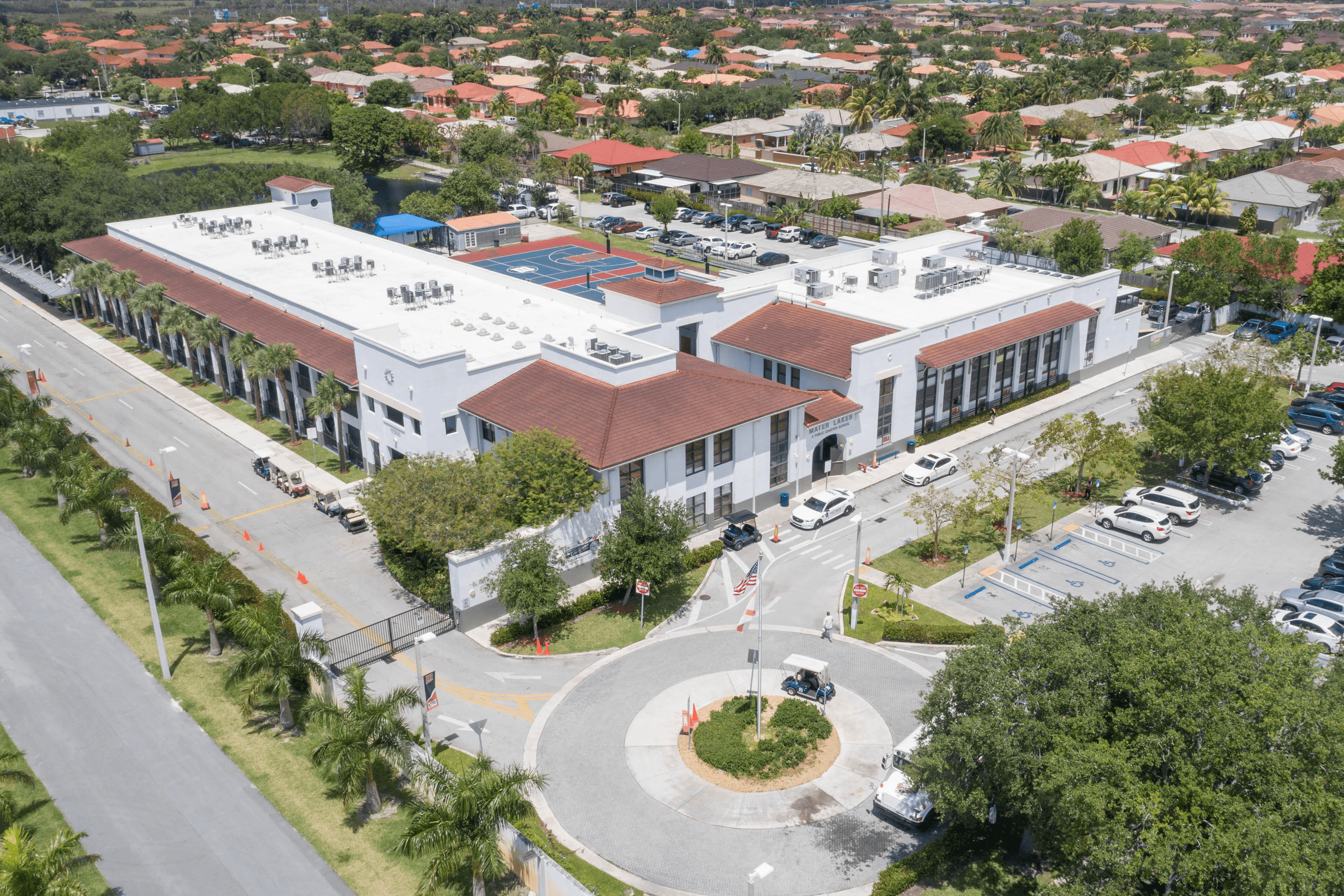
The demand case is not complicated. Miami-Dade absorbed hundreds of thousands of new residents over the past five years, and a meaningful share of them are families with school-age children who arrived specifically because Florida's school choice framework gave them options their home states did not. Miami-Dade's public school system, already one of the largest in the country, cannot absorb that growth within its existing footprint. Charter operators — with the ability to move faster, choose their sites, and build purpose-designed facilities — are structurally better positioned to respond to that demand than the district system. The political environment, from the Governor's office to the Legislature's funding mechanisms, has never been more favorable.
Miami's Charter School Expansion Bottleneck is Sites
What slows projects down is almost always the same set of civil conditions. Charter school sites in Miami-Dade must accommodate student drop-off and pickup queuing that does not back onto public roads — a traffic engineering requirement that eliminates many otherwise attractive infill parcels. Stormwater management on compact urban sites must satisfy both county drainage standards and SFWMD permitting within footprints that leave adequate outdoor space for the school program. Utility extensions in growth corridors where new schools are most needed — western Miami-Dade, Homestead, Hialeah Gardens — are often not as simple as the site plan suggests. And the Miami-Dade School Board's own site approval process for charter facilities adds a review layer that must be navigated in parallel with standard building permitting.

Operators who treat the site and civil work as a commodity — something to hand to the lowest bidder after the charter is approved — consistently experience the same outcome: schedule delays in the 6–18 month range that push opening dates past committed enrollment cycles, triggering student and family attrition before the school ever opens.
ASOM's Advantage
Building the Infrastructure Behind School Choice
American Services of Miami provides end-to-end civil engineering and site development services for charter school projects across South Florida. From site selection assessment and boundary survey, through traffic study coordination, site plan design, stormwater permitting, and construction administration — we manage the full civil scope so that operators and their capital partners can focus on the educational program, not the ground beneath it. We know what Miami-Dade's site approval process requires, and we know how to build a delivery schedule that protects your opening date.